Month: February 2016
Hike Details – Saturday 27th February
Hi all,
As discussed at last night’s meeting, we will be meeting at the Den at 9:45 am on Saturday morning. We will be heading up to Carlingford and climbing Louth’s highest mountain Slieve Foye (588 metres).
The weather forecast is no rain, but chilly so make sure to have plenty of layers, hats and gloves. You can view the forecast here
We should be back at 4:30pm (approx)
See you all Saturday!!
Gear List
- Neckerchief
- Packed Lunch
- Hat

- Gloves
- Thick jumper
- Day bag (backpack)
- Hiking boots
- Thick socks
- Rain gear – Rain Jacket and Rain Trousers
- Torch
- Emergency rations (sweets)
- Survival bag (bivi bag)
- Whistle
- Platypus/Water Bottle
Skills Videos
We will be practising some mountain skills, here’s a couple of videos to remind you :
Founder’s Day

Happy Birthday BP!
Founders’ Day is celebrated on 22 February, the birthday of Robert Baden-Powell, (born in 1857), the founder of Scouting


Emergencies resources
Hi all,
We have added some of the resources and videos that we used in last week’s meeting below. These will be available under the Badgework -> Adventure Skills section of our website as well.
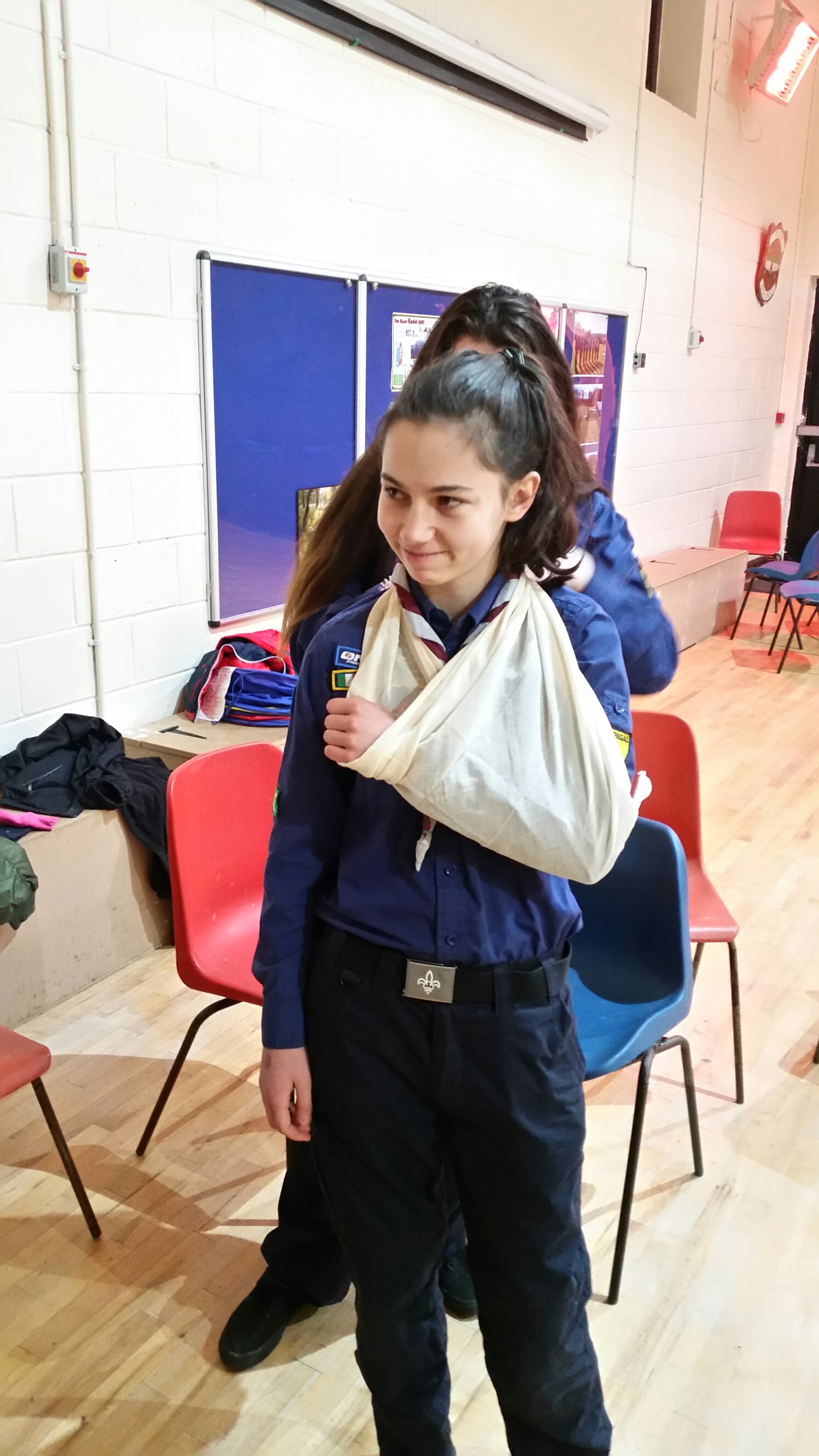
The approach that we use when assessing a casualty is DR ABCDE
On this page we have some useful information and videos which we use when treating a casualty.
DR ABCDE
Primary Survey
Hands only CPR
Baby CPR
Save a choking baby
The DR ABCDE steps are summarised in the table below:
D |
Danger | • Is the surrounding area safe? • Look for danger • Why has the casualty become a casualty in the first place? |
R |
Response | • Is the casualty conscious or not? • Introduce yourself • Squeeze and shout |
A |
Airway | • If unconscious, look in the mouth for obstruction and clear if you can • Open the airway using head tilt/chin lift manoeuvre |
B |
Breathing | • Is the casualty breathing? • Look, listen and feel for breathing – 10 secondsIf not breathing normally, start CPR |
C |
Circulation | • Is the heart working? • Look for colour, check pulse • Look for major bleeding and treat if found |
D |
Deformity | • Examine the casualty from head to toe • Look, listen and feel for deformity, swelling, bruising, loss of function, bleeding, pain • Compare one side of the body with the other |
| Place unconscious casualty in safe airway/recovery position | ||
E |
Emotion | • Reassure casualty • Talk to them as much as you can • Monitor vital signs • Consider the environment |
Primary Survey
https://youtu.be/N8TRhehlAQU
Back to top
Hands only CPR
https://youtu.be/ILxjxfB4zNk
Back to top
Baby CPR